


Non-Destructive Testing

Magnetic Particle Inspection (MPI)
Detects surface and near-surface defects (e.g., cracks, fractures) in ferromagnetic materials.
Early detection of cracks and flaws helps prevent catastrophic failures in critical components.

Dye Penetrant Inspection (DPI)
Detects surface-breaking defects such as cracks, pores, and leaks in non-porous materials like metals, plastics, and ceramics.
Early crack detection extends the lifespan of critical components.

Ultrasonic Thickness Gauge (UT TG)
Measures material thickness non-destructively, detecting thinning due to corrosion, erosion, or wear.
Identifies areas of concern before they become critical, ensuring safe operation of equipment.

Ultrasonic Flaw Detector
(UT FD)
Identifies internal and surface defects (such as cracks, voids, and inclusions) in materials using ultrasonic waves.
Identifies internal defects not visible to the naked eye.
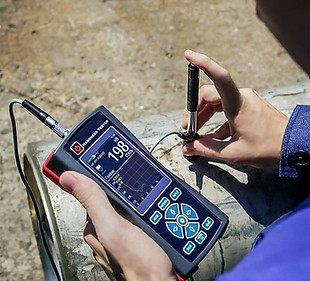
Hardness Testing
HT method measures the hardness of materials, indicating their resistance to deformation, wear, or scratching.
Commonly used in quality control, material selection.

Borescope Inspection
Enables visual inspection of hard-to-reach internal areas of machinery, structures, or components.
Access to Confined Spaces: Allows inspection of hard-to-reach areas without disassembly, saving time and labor.

Positive Material Identification (PMI)
PMI identifies the chemical composition of materials, ensuring they meet specifications and standards.

Other NDT Methods
Beyond our core services, we offer various Non-Destructive Testing (NDT) methods, including Visual Inspection (VT), Fluorescent Testing, Radiographic Testing (RT), and Acoustic Emission Testing (AET).
Contact us directly to learn more!
Request for a Quotation
If you are interested in our Non-Destructive Testing (NDT) services, please fill out the form below to request a quotation.